
Work under Transformation – Brochure


About

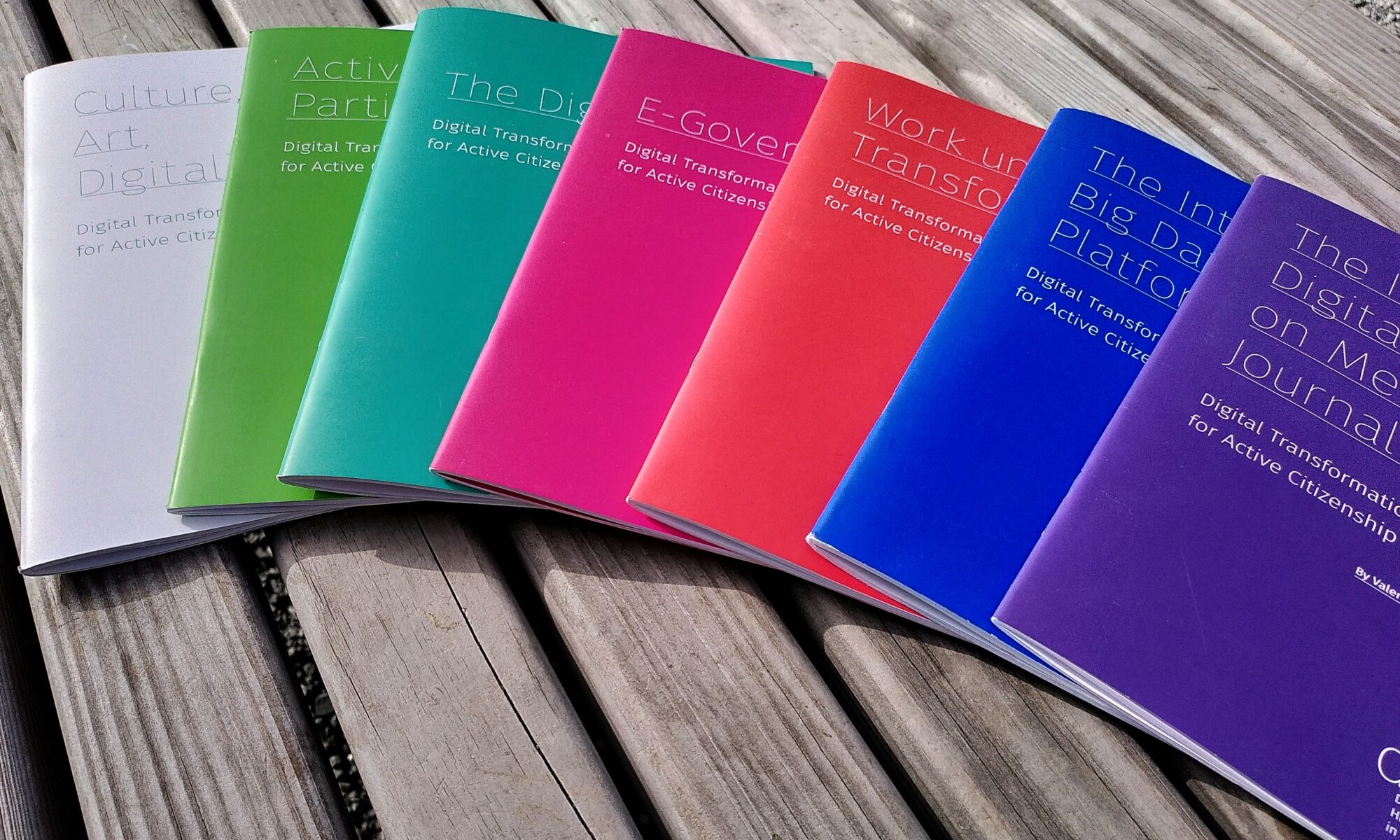
Platformisation of the European economy, automatisation, additive factoring and the (global) redefinition of value chains and collaboration processes are digital drivers of industrial transformation. Obviously, these developments also have an impact on concrete working conditions, although the differences among countries and also sectors are remarkable. Working spaces have also become more technologically enhanced. One result of digitalisation and rationalisation is job polarisation, an increase of high-profile and low-profile jobs while those in the middle vanish. On the other hand, platforms are creating a new kind of working environment. In particular this brochure also highlights how education policies and training strategies might respond to these challenges. It ends with scenarios in regard to (un)employment and labour and with the idea of a universal basic income, which has received increasing support thanks to discussions about digital transformation.


From the Table of Content

  • Rationalization and Job Polarisation
  • The Crowd Working in the Cloud
  • Transformation of the Working space
  • Toward Upskilling and Lifelong Learning
  • A Future without Labour? By Ramón Martínez

Part of the Series

Smart City, Smart Teaching: Understanding Digital Transformation in Teaching and Learning. Created in the project DIGIT-AL – Digital Transformation in Adult Learning for Active Citizenship.

This image has an empty alt attribute; its file name is DIGIT-AL-Hefte-1024x723.jpg


Background:


This image has an empty alt attribute; its file name is 200px-Erasmusplus.jpg

Co-funded by the European Union

Education & Learning – Brochure


About

Digital transformation has an impact on learning in all ages and situations and is influencing the education and training sector. Education for Democratic Citizenship and Human Rights Education can play a specific role in this transformation and this focus might also affect what kind of digital competencies education is aiming to facilitate. Certainly the education sector itself is a space where digital instruments are more and more included. Therefore the brochure is asking what characterizes digital didactics and digital learning describe, especially in relation and complementary to “analogue” learning spaces. It ends with an outlook to the new practices in the field of recognition of learning – open badges and micro-credentialing.


From the Table of Content

  • Education, a Dimension of Digitalisation – Digitalisation, a Dimension of Education?
  • Impact of Digital Transformation (Adult) Education and Training by Daniela Kolarova
  • Education in the Digital Divide by Elisa Rapetti
    Interview with Dino, Maurizio and Mara Pieri from Informatics Without Borders
  • Competences for the Digital Transformation by Ramón Martínez
  • The Teacher as an Adult Learner by Ingūna Irbīte
  • There is no Digital Didactics by Jöran Muuß-Meerholz
  • I Know How to Teach, Do I Know How to Do it Digitally? by Ramón Martínez
  • Future of Recognition?
    Micro-credentialling: Open Badges in Non-formal Education by Mike Cotterell
    Avenues for Self-assessment and Competence-based Professional Development: The Case of AppRaiser by Snežana Bačlija Knoch
  • Outlook and Resume for Education and Learning

Part of the Series

Smart City, Smart Teaching: Understanding Digital Transformation in Teaching and Learning. Created in the project DIGIT-AL – Digital Transformation in Adult Learning for Active Citizenship.

This image has an empty alt attribute; its file name is DIGIT-AL-Hefte-1024x723.jpg


Background:


This image has an empty alt attribute; its file name is 200px-Erasmusplus.jpg

Co-funded by the European Union

The Impact of Digitalisation on Media and Journalism – Brochure


About

Digitalisation has changed journalism in the last two decades. The digital revolution has created a high-choice media environment, and one of the consequences has been (paradoxically?) news avoidance. Another appearance in recent years has been so-called “fake news” or “disinformation” which we discuss under the topic “information disorder”, which has a wider meaning. Next, we examine new information models as possible ways out, including investigative journalism, explanatory reporting, solutions journalism, constructive journalism, and data journalism. Finally, we focus on media literacy as an educational response to cope with the new media environment.


From the Table of Content

  • Two decades of extreme turbulence
  • Information disorder
  • What ways out?
  • New information models
  • Media and information literacy

Part of the Series

Smart City, Smart Teaching: Understanding Digital Transformation in Teaching and Learning. Created in the project DIGIT-AL – Digital Transformation in Adult Learning for Active Citizenship.

This image has an empty alt attribute; its file name is DIGIT-AL-Hefte-1024x723.jpg


Background:


This image has an empty alt attribute; its file name is 200px-Erasmusplus.jpg

Co-funded by the European Union

E-Governance – Brochure


About

The digital transition in regard to governments has made all societies focus on security, democracy and data protection issues. In some countries, digitalisation has moved more quickly and is more wide-spread than in others. However, digitalisation has become an unstoppable process, and it is most useful to analyse all kinds of threats and risks and evaluate already existing experiences and achievements in e-government. Estonia is considered to be one of the pioneers and pathfinders in the digital transition of public services and infrastructure, as it was one of the first to start developing e-governance with wide digital possibilities. We introduce, how Estonia has established its e-society and changed also the understanding of people as (digital) citizens with access to tools and platforms that have become essential to participate in society. In consequence, everybody today needs digital citizenship skills to fully participate in the social life of their communities.


From the Table of Content

  • Public Services under Transformation
  • How it all came about in Estonia
  • Through the lens of democracy and human rights

Part of the Series

Smart City, Smart Teaching: Understanding Digital Transformation in Teaching and Learning. Created in the project DIGIT-AL – Digital Transformation in Adult Learning for Active Citizenship.

This image has an empty alt attribute; its file name is DIGIT-AL-Hefte-1024x723.jpg


Background:


This image has an empty alt attribute; its file name is 200px-Erasmusplus.jpg

Co-funded by the European Union

The Internet, Big Data & Platforms – Brochure

Continue reading “The Internet, Big Data & Platforms – Brochure”

Activism & Participation – Brochure


About

Social movements’ transform (digitally) and also the idea and ways of active participation. The authors underline the relevance of both online and offline forms of participation in a world where (hack)tivists and movements play an increasingly major role in local communities and in the global processes. From the tech universe to social feminist organizations, they highlight movements that have mapped out an important path in empowering citizens and brought citizens’ voices into the public. The brochure concludes with some reflection about how participation will change in the future and about the necessary competences for participation of citizens under the conditions of the (digital) transformation age.


From the Table of Content

  • New on/offline behaviours & hacktivism
    Interview with Diego Ceccobelli
    Can Offline Communities Significantly Change as a Result of Digital Transformation?
    Digital Feminism and #Hashtag Activism
    #BlackLivesMatter
  • Plural forms of participation
    How to Make Digital Participation Inclusive?
  • Trust and Participatory Governance (by Nils-Eyk Zimmermann)
  • Is the Future in Between On and Offline Activism?
  • Conclusions for Education

Part of the Series

Smart City, Smart Teaching: Understanding Digital Transformation in Teaching and Learning. Created in the project DIGIT-AL – Digital Transformation in Adult Learning for Active Citizenship.

This image has an empty alt attribute; its file name is DIGIT-AL-Hefte-1024x723.jpg


Background:


This image has an empty alt attribute; its file name is 200px-Erasmusplus.jpg

Co-funded by the European Union

The Digital Self – Brochure


About

The question of how digitalisation instigates changes to our body, our social identity and our self-image is becoming apparent. This chapter describes the conditions and aspects constituting a digital identity. One important aspect is the machine-human relationship and its underlying constructive conditions. Another is the identificatory aspect of digital technology – the tension between privacy and identifiability (and for whom), and also we need to explore mechanisms of exclusion and inclusion. Therefore, digital transformation has an impact on the ideas of privacy and autonomy and how they might be achieved in the digital social reality, especially under the conditions that big data and datafication create. The second part tackles the question of how the exposure to and embeddedness in digital interaction affects the abilities and attitudes of us as individuals.


From the Table of Content

  • Into the Internet of Everything
    Gain of Intuition, Loss of Overview
    Body-Machine-Interaction
    Disabled or Cyborg? Interview with Bertolt Meyer,
    Biometry and Identification
    Privacy
    Processing and Refinement of Personal Data
    Market Regulation
  • Mentally controlled by data?
    Impact on Health
    Promoting Conformism?
    Impact on Abilities and Competences
  • Our Creepy Lines
    Seeking the Balance

Part of the Series

Smart City, Smart Teaching: Understanding Digital Transformation in Teaching and Learning. Created in the project DIGIT-AL – Digital Transformation in Adult Learning for Active Citizenship.

This image has an empty alt attribute; its file name is DIGIT-AL-Hefte-1024x723.jpg


Background:


This image has an empty alt attribute; its file name is 200px-Erasmusplus.jpg

Co-funded by the European Union

Training: Digital Competence as a Civic Key-Competence. Let’s Unleash the Potential of Education for Democratic Citizenship/Human Rights Education

The project DIGIT-AL identified different aspects of digital transformation that need more awareness from a civic education and Human Rights education perspective. At the same time, there is a potential of civic education for learning about, for and with digitalisation.

The training explored good educational practices linking digitalisation with Education for Democratic Citizenship/Human Rights Education. It discussed paths toward a digital pedagogy dedicated to digital competence also understood as a competence to support learners in understanding and co-creating the social, cultural and economic impact of digitalisation.

Continue reading “Training: Digital Competence as a Civic Key-Competence. Let’s Unleash the Potential of Education for Democratic Citizenship/Human Rights Education”

Expanding the Pedagogy of the Digital

Digitalization is an important topic of European policy. Adult Education has a crucial role to play in accompanying the transformation.

By Nils-Eyk Zimmermann (DIGIT-AL project)

The impact of the current policy developments in the field of digital transformation on European level cannot be underestimated. The Digital Services Act and Digital Markets Act will determine what platforms are (still) allowed to do and how the rules of the game of digital capitalism will work. The Circular Economy Action Plan suggests a right to repair. With the way rules for Artificial Intelligence are developed and implemented a market for data-sensitive and democratic innovation is emerging, a European way of dealing with AI or a European-dressed American way. How Europe defines and enforces the Next Generation Internet influences how free, decentralized, competitive, accessible the Internet and digital single market in Europe and if not beyond our continent will be.

Continue reading “Expanding the Pedagogy of the Digital”