

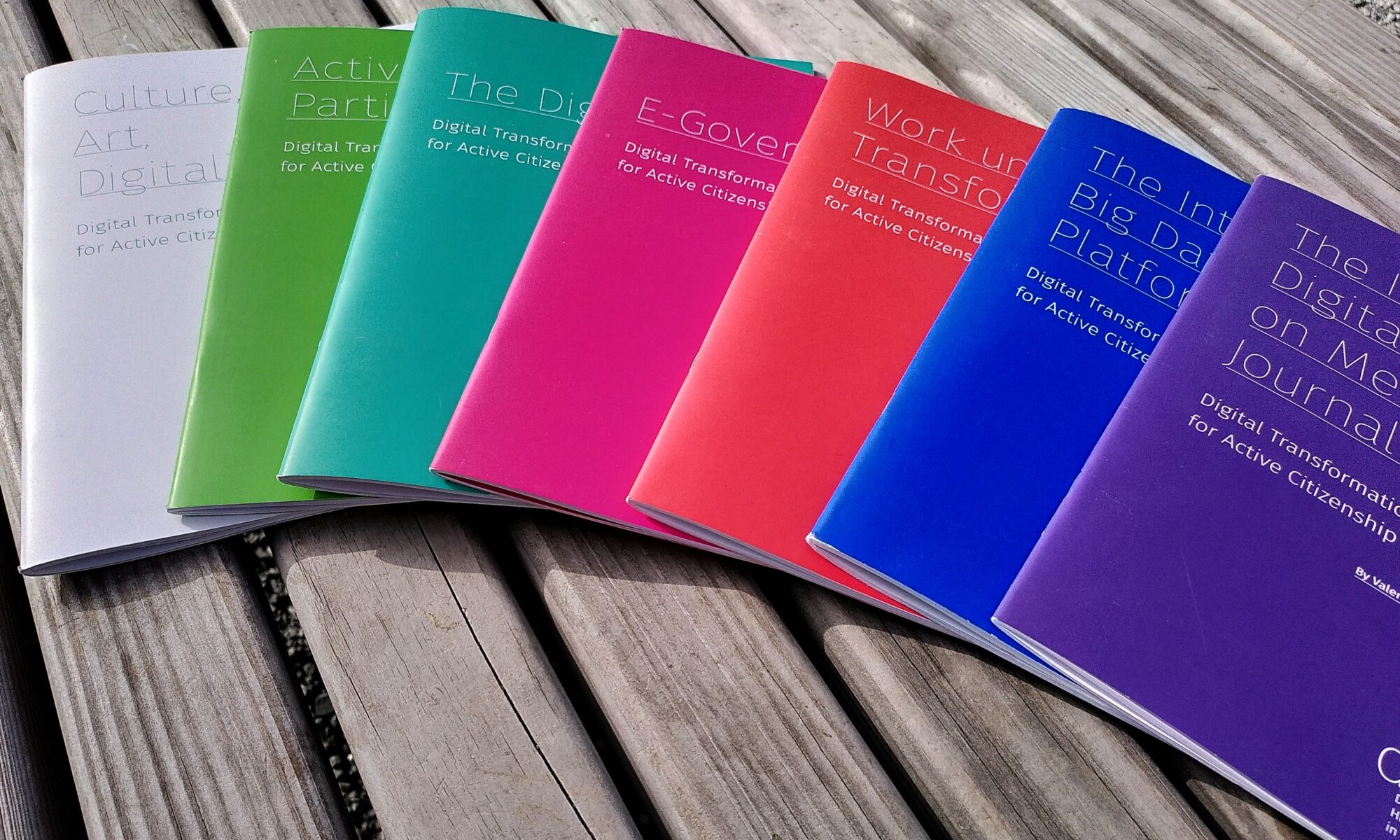
Cite: Valentina Vivona & Niccolò Caranti (2020). The Impact of Digitalisation on Media and Journalism. Digital Transformation in Learning for Active Citizenship. DARE Blue Lines, DARE – Democracy and Human Rights Education in Europe, Brussels
44 pages, DARE Network, 2020

About
Digitalisation has changed journalism in the last two decades. The digital revolution has created a high-choice media environment, and one of the consequences has been (paradoxically?) news avoidance. Another appearance in recent years has been so-called “fake news” or “disinformation” which we discuss under the topic “information disorder”, which has a wider meaning. Next, we examine new information models as possible ways out, including investigative journalism, explanatory reporting, solutions journalism, constructive journalism, and data journalism. Finally, we focus on media literacy as an educational response to cope with the new media environment.
From the Table of Content
- Two decades of extreme turbulence
- Information disorder
- What ways out?
- New information models
- Media and information literacy
Part of the Series
Smart City, Smart Teaching: Understanding Digital Transformation in Teaching and Learning. Created in the project DIGIT-AL – Digital Transformation in Adult Learning for Active Citizenship.

Background:

Co-funded by the European Union