

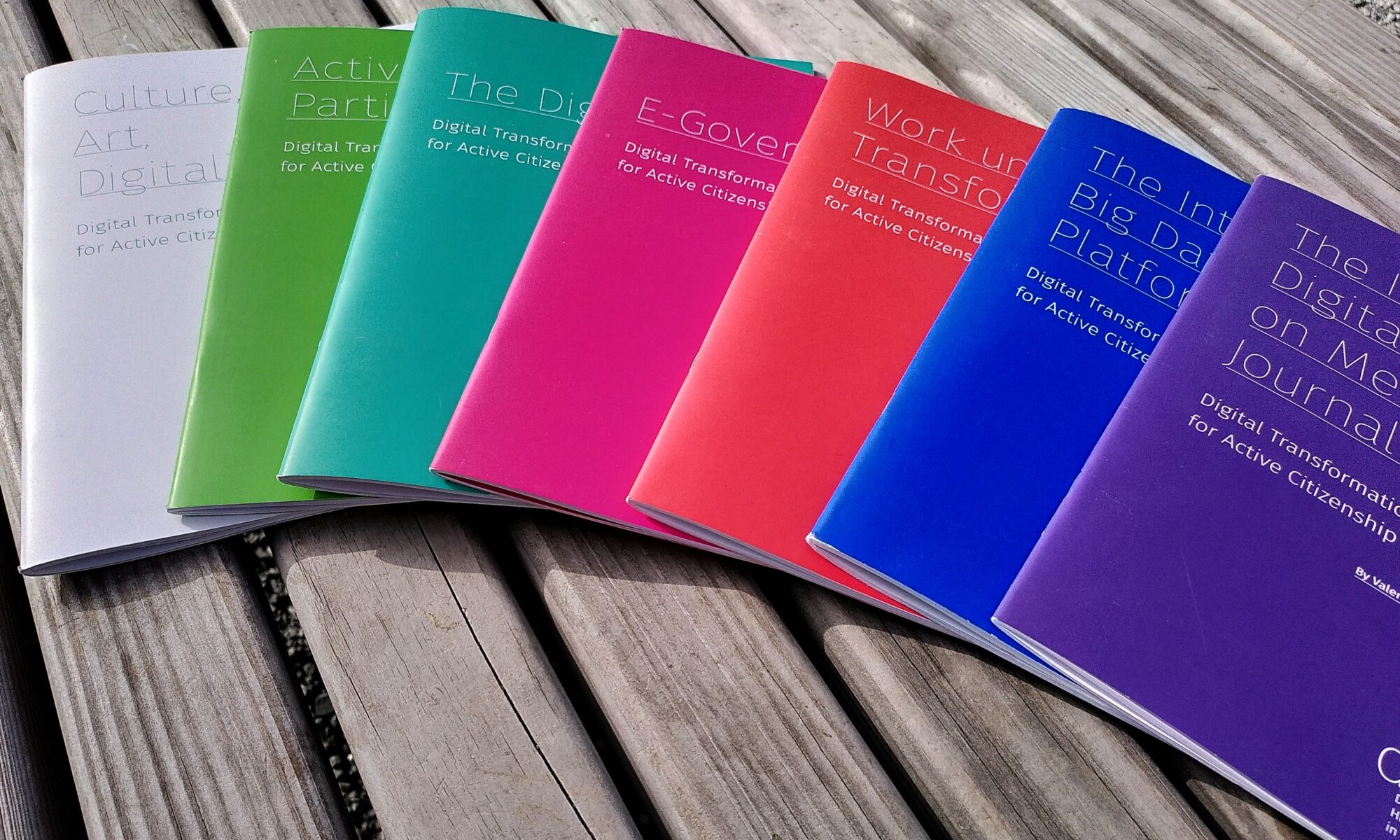
Cite: Nils-Eyk Zimmermann (2020). The Digital Self. Digital Transformation in Learning for Active Citizenship. DARE Blue Lines, DARE – Democracy and Human Rights Education in Europe, Brussels
With a contribution by Bertolt Meyer, co-edited by: Ramón Martínez and Elisa Rapetti
60 pages, DARE Network, 2020

About
The question of how digitalisation instigates changes to our body, our social identity and our self-image is becoming apparent. This chapter describes the conditions and aspects constituting a digital identity. One important aspect is the machine-human relationship and its underlying constructive conditions. Another is the identificatory aspect of digital technology – the tension between privacy and identifiability (and for whom), and also we need to explore mechanisms of exclusion and inclusion. Therefore, digital transformation has an impact on the ideas of privacy and autonomy and how they might be achieved in the digital social reality, especially under the conditions that big data and datafication create. The second part tackles the question of how the exposure to and embeddedness in digital interaction affects the abilities and attitudes of us as individuals.
From the Table of Content
- Into the Internet of Everything
Gain of Intuition, Loss of Overview
Body-Machine-Interaction
Disabled or Cyborg? Interview with Bertolt Meyer,
Biometry and Identification
Privacy
Processing and Refinement of Personal Data
Market Regulation - Mentally controlled by data?
Impact on Health
Promoting Conformism?
Impact on Abilities and Competences - Our Creepy Lines
Seeking the Balance
Part of the Series
Smart City, Smart Teaching: Understanding Digital Transformation in Teaching and Learning. Created in the project DIGIT-AL – Digital Transformation in Adult Learning for Active Citizenship.

Background:

Co-funded by the European Union